A Hypothetical Food Bank Budget: What Monthly Giving, a Weekly Impact Email, and Three Segments Would Add
— March 10, 2026 — 5 min read
The Starting Point
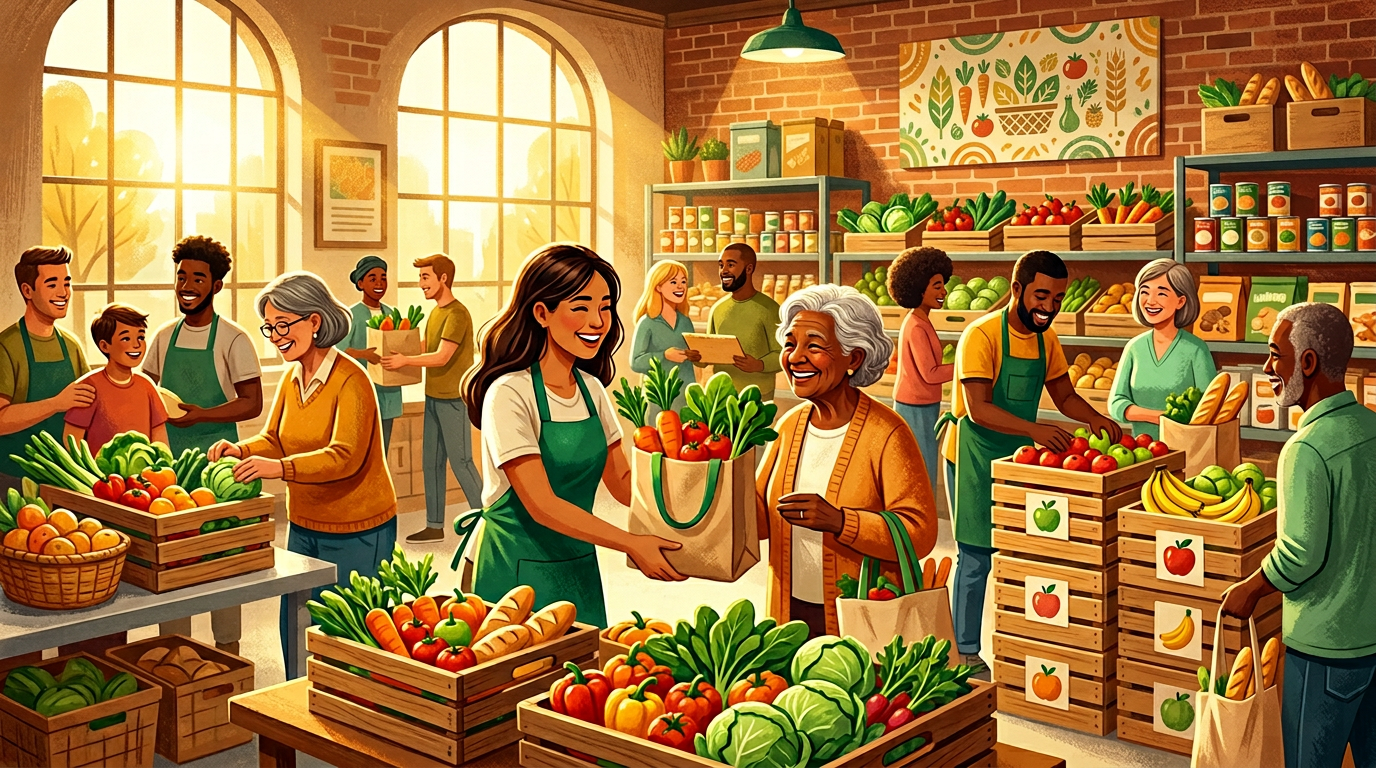
This is a hypothetical model. The food bank, its donors, and every number below are invented so the arithmetic can be shown; nothing here happened to a real organization or a FundraiserMax customer. The setup: a regional food bank with twelve staff, $380,000 raised last year from 1,240 donors, a spring mailing and a fall push, and demand up 40 percent. Swap in your own numbers as you go.
Two appeals a year means two bites at the apple. The three changes below each add a third, fourth, and fifth bite, and each one carries into the following year in a way an appeal doesn't.
Change 1: From Annual Appeals to Monthly Giving
The pitch is simple: $25 a month provides 100 meals. It goes in every email, on the website, and in a dedicated campaign to the most engaged donors.
Model assumption: 5 percent of the 1,240-donor file converts to $25 a month within a year. That's 62 sustainers at $300 a year each, or $18,600 in gross recurring revenue. If those 62 donors were already giving about $100 a year through the appeals, the net new money is 62 times $200, or $12,400. Move the conversion rate to 10 percent and both numbers double.
Year two is where the program pays. Assume 85 percent of sustainers are still giving twelve months later (set your own rate; sustainer retention is the number to watch every month). That leaves 53 of the original 62, plus whatever the second year's conversion adds, before a single appeal goes out.
Change 2: A Weekly Impact Email
Replace the quarterly newsletter (a four-page PDF nobody opens) with a weekly single-topic email: one story, one photo, one number.
Example: "This week, your donations provided 2,847 meals to 412 families. Meet a family who visited the pantry for the first time last Tuesday."
Model assumption: 900 of the 1,240 donors have a usable email address, the open rate moves from 18 percent to 30 percent, and 2 percent of openers give an average of $50 from any given send. At 18 percent, each send produces about 162 opens, 3 gifts, and $160. At 30 percent, about 270 opens, 5 gifts, and $270. Over 50 sends that's roughly $13,500 a year versus $8,100, and the weekly email is also where the monthly-giving pitch lives, so Change 1 rides on it.
Change 3: Donor Segments and Specific Asks
In the starting file, every donor gets the same letter with the same ask. A $25 donor and a $2,500 donor get identical mail.
The model splits the file into three segments:
- New donors ($1 to $99): a welcome sequence built on impact stories, then an ask to join monthly giving
- Mid-level ($100 to $999): quarterly impact reports, an invitation to volunteer days, a year-end ask at 1.5 times the last gift
- Major ($1,000 and up): personal calls from the executive director, facility tours, named program sponsorships
Model assumption: 400 mid-level donors with an average last gift of $250 receive a year-end ask at $375 ("Your last gift of $250 provided 1,000 meals. A gift of $375 today provides 1,500"). If 20 percent accept the higher amount, that's 80 donors times $125, or $10,000 in lift. If five of the 40 major donors add $1,000 after a call and a tour, add $5,000. The ask amount is the lever; change the acceptance rate and watch the total move.
Where the Three Programs Compound
Nothing in the model is new. Monthly giving, a weekly impact email, and three donor segments are standard programs. The variable is whether a small shop runs all three at once and looks at the numbers every Monday.
That takes a donor file with segments and email in the same system. Smart segments in FundraiserMax split a file on total given, last gift amount, last gift date, and gift count, and email campaigns and drip sequences run from the same records, at $40 per user per month with a 7-day free trial (no charge until day 8).
Model Inputs and Outputs (Illustrative)
| Assumption | Value used | Year-one effect | What changing it does |
|---|---|---|---|
| Sustainer conversion | 5% of 1,240 donors at $25/month | +$18,600 gross | 10% conversion doubles it |
| Sustainer retention | 85% after twelve months | 53 of 62 carry into year two | Every 5 points is about 3 donors |
| Email open rate | 18% to 30% on 900 addresses | +$5,400 over 50 sends | Depends on the 2% give rate holding |
| Mid-level upgrade acceptance | 20% of 400 donors at 1.5x | +$10,000 | Each 5 points is $2,500 |
| Major donor upgrades | 5 of 40 add $1,000 | +$5,000 | Depends on who makes the calls |
| Combined year-one lift | all of the above | about +$39,000 on $380,000 | Year two starts from a higher base |
A 10 percent lift in year one (about $33,000 net if the 62 sustainers were already giving $100 through the appeals) is not a doubling, and the model doesn't pretend otherwise. Plug in your own file. The reason to run all three anyway is that each carries into year two, and a gala starts from zero every spring.
Tags: hypothetical model, food bank, monthly giving, donor segmentation, impact reporting
 Donor Advised Funds and Nonprofits: How to Earn More DAF Grants in 2026
 Recurring Giving for Nonprofits and Campaigns: Setup, Retention, and Compliance
 Donor Retention: The Line Item Missing From Most Fundraising Budgets